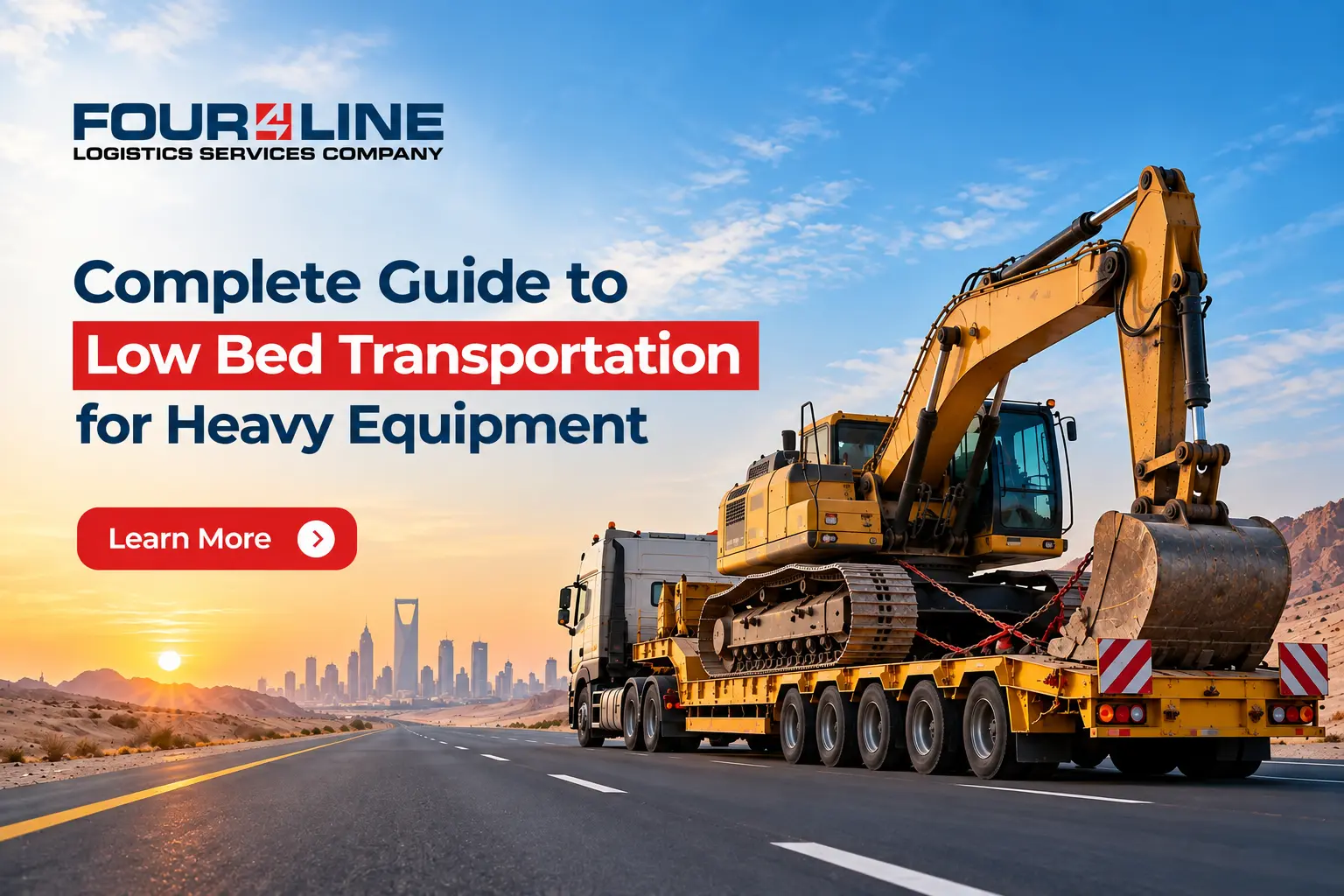
Moving heavy machinery from one location to another can become complicated when the equipment is too tall, too wide, or too heavy for conventional transportation. Construction companies, industrial businesses, infrastructure contractors, equipment suppliers, and project operators often need specialized transport solutions to move such machinery safely.
This is where Low Bed Transportation in Saudi Arabia becomes an important part of heavy logistics.
Low bed trailers are designed with a lower deck compared with standard trailers. This configuration can help accommodate tall and heavy machinery while providing a suitable platform for transportation. However, successful heavy equipment movement involves much more than simply choosing a low bed trailer.
The trailer configuration, cargo dimensions, weight distribution, loading method, securing arrangements, route, site access, and delivery requirements all need to be considered before the journey begins.
So, what makes low bed transportation suitable for heavy equipment, and how should businesses plan these movements?
What Is Low Bed Transportation?
Low bed transportation involves specialized trailers designed with a lowered deck to carry heavy, tall, or oversized equipment.
Unlike a conventional flatbed, the lower deck position can help reduce the overall height of the loaded vehicle. This is particularly useful when transporting equipment that already has considerable height.
Common examples of equipment transported using low bed trailers include:
- Excavators
- Bulldozers
- Wheel loaders
- Cranes
- Forklifts
- Generators
- Drilling equipment
- Industrial machinery
- Construction equipment
- Large agricultural machinery
The exact trailer required depends on the equipment’s dimensions, weight, configuration, and transportation requirements.
Modern heavy transport providers also use different trailer configurations depending on the load. Standard low beds may be suitable for some machinery, while multi-axle or specialized configurations may be required for heavier or more complex cargo.
Why Are Low Bed Trailers Used for Heavy Equipment?
The main advantage of a low bed trailer is its deck height.
When heavy machinery is positioned lower to the ground, the overall transport height can be reduced. This can be particularly important when the equipment is tall and the transportation route includes bridges, overhead structures, or other clearance considerations.
A lower deck can also provide a stable platform for certain types of machinery.
However, a low bed trailer should never be selected simply because the cargo is heavy. The trailer needs to match the actual specifications of the equipment.
Before transportation, the logistics team should evaluate:
- Cargo weight
- Overall length
- Width
- Height
- Center of gravity
- Axle requirements
- Loading method
- Unloading method
- Site access
- Route requirements
This load-first approach is commonly used by specialist heavy transport providers.
Low Bed Trailer vs Flatbed: Which One Is Better?
Not every heavy shipment requires a low bed trailer.
A conventional flatbed can be suitable for cargo that does not create significant height, weight, or loading challenges. A low bed trailer becomes more relevant when the cargo requires additional clearance or specialized heavy-load handling.
| Feature | Low Bed Trailer | Flatbed Trailer |
|---|---|---|
| Deck position | Lower | Higher |
| Tall equipment | Well suited | May create height challenges |
| Heavy machinery | Suitable for many applications | Depends on load |
| Typical use | Heavy & oversized equipment | General cargo and equipment |
| Loading | Ramps or specialized methods | Various loading methods |
| Route planning | Often more complex | Generally simpler |
The right choice depends on the cargo rather than the trailer name alone.
For example, a large excavator may require a low bed configuration because of its height and weight, while smaller equipment may be transported using another suitable trailer.
What Equipment Can Be Transported on a Low Bed?
One of the most common applications is Heavy Equipment Transportation for construction and industrial machinery.
Excavators
Excavators can be difficult to move between project sites under their own power. Transporting them on a suitable trailer can reduce travel time and avoid unnecessary wear on tracks and mechanical components.
Bulldozers
Bulldozers are heavy and often have substantial dimensions. Their weight and configuration need to be considered when selecting the trailer and planning the movement.
Cranes
Cranes can involve particularly complex transportation requirements because of their dimensions and components. Depending on the equipment, some parts may need to be prepared separately for transportation.
Generators and Industrial Equipment
Large generators, industrial machines, production equipment, and other heavy units may also require specialized transport when they cannot be moved using conventional trailers.
The important point is that every piece of equipment should be assessed individually before transportation.
How Is the Right Low Bed Trailer Selected?
Trailer selection should begin with the cargo specifications.
A logistics provider normally needs information such as the equipment’s weight, dimensions, pickup location, delivery location, and unloading requirements.
For example, a 20-ton machine and a significantly heavier industrial unit may require very different trailer configurations.
The number of axles and trailer configuration can influence how the load is distributed. For heavier cargo, multi-axle solutions may be considered to distribute the load appropriately. Specialist providers commonly assess the load, dimensions, and route before confirming the transportation setup.
Providing accurate cargo information at the quotation stage therefore helps prevent problems later.
How Is Heavy Equipment Loaded Safely?
Loading is one of the most important stages of the transportation process.
Depending on the equipment, machinery may be driven onto the trailer using ramps or loaded using suitable lifting equipment.
Before loading, the transportation team should establish:
- Where the equipment will be positioned.
- How the equipment will be loaded.
- How weight will be distributed.
- Where securing points are available.
- How the equipment will be unloaded at the destination.
The equipment should be positioned so that the trailer remains properly balanced.
A poorly positioned load can create unnecessary handling and stability issues, which is why loading should be treated as part of the transportation plan rather than an activity carried out at the last minute.
Why Is Cargo Securing So Important?
After the machinery has been loaded, it needs to be secured appropriately.
During transportation, heavy equipment can experience forces caused by braking, acceleration, turning, uneven road surfaces, and changes in speed.
The securing method should therefore be appropriate for the equipment’s weight, dimensions, structure, and available securing points.
The transportation team should inspect the load before departure and confirm that the equipment is stable and properly restrained.
Specialist lowbed operations commonly treat trailer selection, lashing, securing, and route planning as connected parts of the same transport plan.
How Does Route Planning Affect Heavy Transport?
Moving oversized equipment requires more route planning than standard cargo.
The dimensions of the loaded vehicle can affect which roads and access points are practical.
Potential considerations include:
- Road width
- Turning radius
- Bridge clearance
- Overhead structures
- Road conditions
- Construction zones
- Traffic conditions
- Site entrances
- Loading and unloading areas
This is particularly important for Oversized Cargo Transportation, where the dimensions of the load can influence the entire movement.
Route planning should therefore take place before dispatch rather than after the truck has already started its journey.
Are Permits and Special Requirements Necessary?
Depending on the dimensions, weight, route, and nature of the movement, oversized or heavy cargo may require specific approvals, permits, documentation, or coordination.
The exact requirements can vary according to the shipment and route, so businesses should confirm the applicable requirements before transportation begins.
A professional logistics provider can help identify the transportation requirements during the planning stage rather than leaving them until the day of dispatch.
This can be particularly important when a shipment is connected to a fixed project schedule.
What Are the Main Safety Considerations?
Safety should be considered at every stage of the movement.
A practical heavy transport plan should consider:
Cargo assessment:
Understand the exact weight and dimensions of the equipment.
Trailer selection:
Match the trailer configuration to the cargo.
Loading:
Use an appropriate method and position the equipment correctly.
Weight distribution:
Ensure the load is positioned appropriately on the trailer.
Securing:
Use suitable restraints and inspect the load before departure.
Route planning:
Consider the loaded vehicle’s dimensions and route conditions.
Site access:
Confirm that the destination can accommodate the trailer and unloading process.
This approach helps turn heavy transport from a simple vehicle movement into a properly planned logistics operation.
When Does Heavy Haulage Become Necessary?
Heavy Haulage becomes particularly relevant when cargo exceeds the practical capabilities of conventional freight transportation.
Examples can include:
- Large construction machinery
- Industrial plant equipment
- Heavy generators
- Cranes
- Large earthmoving equipment
- Project machinery
- Oversized industrial components
The objective is not simply to find the largest trailer available. The transportation solution should be designed around the actual cargo.
For project cargo, this may involve coordinating equipment movement with site schedules, loading operations, route planning, and final delivery requirements.
How Can Businesses Choose the Right Transport Provider?
Choosing a low bed transportation provider should involve more than comparing prices.
Businesses should consider whether the provider can properly assess the cargo and coordinate the entire movement.
Important factors include:
- Experience with heavy equipment
- Suitable trailer configurations
- Loading and unloading capabilities
- Cargo securing procedures
- Route planning
- Documentation coordination
- Project logistics experience
- Communication throughout the shipment
A provider that understands the complete transportation process can identify potential problems before the equipment is dispatched.
This can be particularly valuable for construction and industrial projects where equipment availability directly affects site operations.
What Should You Provide When Requesting a Low Bed Transport Quote?
The more accurate the information provided at the beginning, the easier it is to plan the transportation.
When requesting a quotation, businesses should ideally provide:
- Equipment type
- Make and model
- Weight
- Length
- Width
- Height
- Pickup location
- Delivery location
- Preferred transportation date
- Loading method
- Unloading method
- Any special requirements
Photos of the equipment can also be useful when the machinery has unusual dimensions or attachments.
A clear cargo brief allows the logistics provider to assess the shipment and determine a suitable transportation solution.
Why Choose Four Line Logistics for Low Bed Transportation?
Heavy equipment transportation requires coordination, planning, and attention to detail.
At Four Line Logistics, we understand that oversized machinery cannot be treated like ordinary freight. Each movement needs to be assessed according to the equipment, transportation requirements, route, and delivery location.
Our logistics approach can support businesses moving construction machinery, industrial equipment, project cargo, and other heavy loads through specialized transportation solutions.
From cargo assessment and trailer planning to transportation coordination and delivery, the objective is to provide a structured solution around the actual requirements of the shipment.
Need to Move Heavy or Oversized Equipment?
Whether you are relocating construction machinery, transporting industrial equipment, or supporting a major project, choosing the right transportation solution can make the entire process more efficient.
Contact Four Line Logistics with your equipment dimensions, weight, pickup point, and destination. Our team can review your requirements and help determine the appropriate transportation solution.
Have heavy equipment to move? Get in touch with Four Line Logistics and plan your low bed transportation with confidence.
Frequently Asked Questions
What is a low bed trailer used for?
A low bed trailer is commonly used to transport heavy, tall, and oversized equipment that may not be suitable for a standard trailer.
What equipment can be transported using low bed transportation?
Common examples include excavators, bulldozers, cranes, generators, wheel loaders, industrial machinery, and other heavy equipment.
How is the right low bed trailer selected?
The trailer should be selected based on the cargo’s weight, length, width, height, configuration, loading requirements, and route.
Is low bed transportation suitable for project cargo?
Yes. Low bed transportation can be part of a wider project logistics solution when construction, industrial, infrastructure, or other projects require heavy equipment to be moved.
What information is needed for a low bed transportation quotation?
The most useful information includes the equipment type, weight, dimensions, pickup and delivery locations, loading method, unloading requirements, and preferred transportation date.