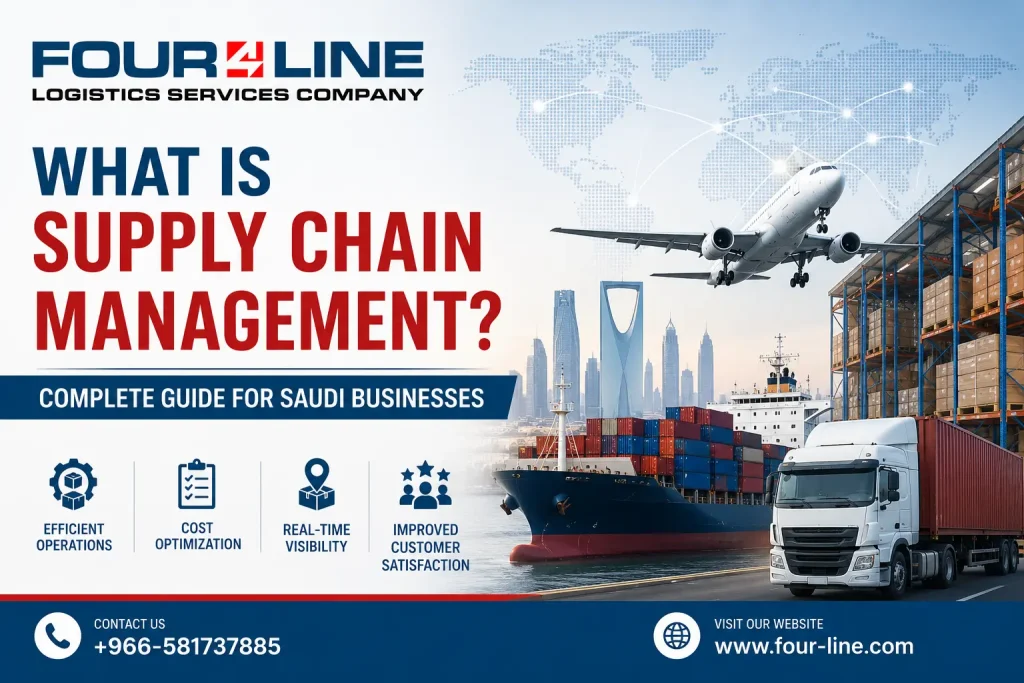
In today’s fast-moving business environment, delivering products on time is just as important as producing quality goods. Whether you’re importing raw materials, manufacturing products, or distributing goods across Saudi Arabia, every step must work together smoothly. This entire process is known as supply chain management.
As Saudi Arabia continues to expand its logistics sector through Vision 2030, businesses are focusing on building faster, smarter, and more reliable supply chains. Companies that invest in Supply Chain Management in Saudi Arabia can reduce costs, improve customer satisfaction, and stay ahead of the competition.
What Is Supply Chain Management?
Supply chain management (SCM) is the process of planning, coordinating, and managing the movement of products from suppliers to the final customer. It involves much more than transportation. Every activity—from purchasing raw materials to delivering finished goods—must be connected to ensure smooth business operations.
An effective supply chain ensures products are available at the right place, at the right time, and at the lowest possible cost. When every stage works together efficiently, businesses experience fewer delays, lower operating costs, and happier customers.
Instead of treating purchasing, warehousing, transportation, and delivery as separate activities, supply chain management brings them together into one well-organized system.
The Main Components of Supply Chain Management
A successful supply chain consists of several interconnected stages. Each one contributes to improving efficiency and delivering products on time.
Planning
Planning is the foundation of every supply chain. Businesses forecast customer demand, estimate inventory requirements, and prepare logistics strategies to avoid delays and unnecessary expenses.
Sourcing
Reliable suppliers are essential for business success. Choosing suppliers that provide quality materials on time helps maintain smooth production and consistent product quality.
Manufacturing
Manufacturing converts raw materials into finished products. Efficient production processes reduce waste, improve productivity, and ensure products meet customer expectations.
Warehousing and Inventory
Warehouses store products safely until they are ready for distribution. Good inventory management prevents both overstocking and stock shortages, helping businesses reduce storage costs while meeting customer demand.
Transportation and Distribution
Products are transported by sea, air, or land depending on delivery requirements. Efficient transportation ensures shipments arrive safely and on schedule, while proper distribution helps products reach customers without delays.
Customs Clearance
For international trade, customs clearance is an essential part of the supply chain. Accurate documentation and compliance with Saudi regulations help businesses avoid shipment delays and unnecessary penalties.
Why Supply Chain Management Is Important for Saudi Businesses
Saudi Arabia has become one of the Middle East’s fastest-growing logistics and trade hubs. Businesses are importing more products, expanding into new markets, and serving customers across the GCC and beyond. Managing these operations efficiently requires a strong supply chain.
A well-managed supply chain provides several business advantages, including:
- Lower logistics and transportation costs
- Faster order fulfillment
- Better inventory control
- Reduced operational risks
- Improved customer satisfaction
- Higher business profitability
- Better coordination between suppliers and customers
Whether you operate a manufacturing company, retail business, or e-commerce store, efficient supply chain management helps improve both daily operations and long-term growth.
How Technology Is Transforming Supply Chains
Technology has changed the way businesses manage their supply chains. Instead of relying on manual processes, companies now use digital systems to monitor inventory, track shipments, and improve planning.
Some of the technologies transforming modern supply chains include:
- Warehouse Management Systems (WMS)
- Transportation Management Systems (TMS)
- GPS shipment tracking
- Artificial Intelligence (AI)
- Internet of Things (IoT)
- Cloud-based logistics software
- Data analytics and demand forecasting
These technologies provide real-time visibility into operations, helping businesses make faster decisions and respond quickly to unexpected disruptions.
Common Supply Chain Challenges
Even experienced businesses encounter supply chain challenges. Global trade depends on many moving parts, and small disruptions can have significant effects on business operations.
Some of the most common challenges include:
- Transportation delays
- Rising freight costs
- Inventory shortages
- Supplier disruptions
- Customs documentation errors
- Poor demand forecasting
- Limited shipment visibility
Businesses that regularly review and improve their supply chain processes are better equipped to overcome these challenges and maintain reliable operations.
How Professional Supply Chain Services Help Businesses
Managing every aspect of a supply chain requires expertise, infrastructure, and continuous coordination. Many businesses choose to work with professional logistics providers to simplify these operations.
A trusted logistics partner can support businesses by:
- Managing domestic and international transportation
- Handling customs clearance
- Providing secure warehousing solutions
- Coordinating freight forwarding
- Optimizing inventory movement
- Improving delivery performance
- Reducing logistics costs
Working with an experienced logistics company allows businesses to focus on growth while leaving complex logistics operations to industry experts.
The Future of Supply Chain Management in Saudi Arabia
Saudi Arabia is investing heavily in logistics infrastructure through Vision 2030. New ports, industrial zones, highways, and digital customs systems are making trade faster and more efficient than ever before.
At the same time, businesses are adopting smart technologies such as automation, AI-powered forecasting, and real-time shipment tracking to improve efficiency. Sustainability is also becoming an important focus, with companies looking for environmentally friendly transportation and warehousing solutions.
Supply Chain Management in Saudi Arabia will play an even greater role in supporting economic growth and helping businesses compete in global markets.
Conclusion
Supply chain management is the backbone of every successful business. From planning and sourcing to transportation, warehousing, customs clearance, and final delivery, every stage contributes to delivering products efficiently and meeting customer expectations. Businesses that invest in modern supply chain strategies can reduce costs, improve operational efficiency, and build stronger relationships with customers and suppliers.
Whether you need freight forwarding, customs clearance, warehousing, or complete logistics support, choosing the right provider can make a significant difference to your business.
At Four-line.com, we offer reliable Supply Chain Solutions in Saudi Arabia tailored to the needs of importers, exporters, manufacturers, retailers, and e-commerce businesses. Our experienced team is committed to delivering efficient logistics solutions that help your business grow with confidence. Contact us today: +966-581737885, Let us help you build a smarter, faster, and more reliable supply chain for your business in Saudi Arabia.
Frequently Asked Questions
Learn how effective supply chain management helps businesses improve efficiency, control costs, and streamline logistics operations across Saudi Arabia.
Discuss Your Logistics Needs ↗